
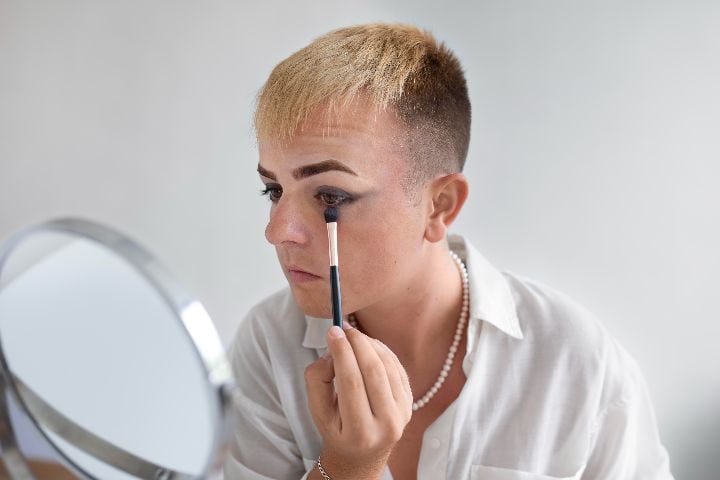
Makeup can feel frustrating when most advice doesn’t seem to work for your face.
Male-to-female makeup is less about gender and more about using the right techniques in the right places.
This guide explains transgender makeup in a practical, wearable way. We’ll look at skin prep, base makeup, eyes, lips, and the products that make MTF makeup easier to understand and apply. Whether you’re just starting out or already comfortable with makeup, this article focuses on results that feel achievable, confidence-boosting, and realistic for everyday wear.
Key takeaways
- Trans makeup focuses on balancing the face rather than hiding it
- Beard shadow correction often makes the biggest difference
- Cream products offer more control when learning the technique
- Setting makeup properly helps it last and feel secure
- A small, well-chosen kit is easier than owning too much
Understanding Male to Female Makeup Basics
How MTF Makeup Differs from Traditional Makeup
Male-to-female makeup isn’t about learning a completely new set of products — it’s about adapting technique. Facial structure, skin texture, and facial hair growth can all affect how makeup behaves on the skin.
Many trans women notice:
- A stronger jawline or chin
- A more prominent brow ridge
- Deeper-set or hooded eyes
- Beard shadow around the mouth and chin
Transgender makeup works best when it softens transitions rather than trying to erase features completely. Light layers, careful placement, and good blending tend to look more natural than heavy coverage.
Skin Prep Is Non-Negotiable
Skin prep has a noticeable impact on how makeup looks and wears. Clean, hydrated skin allows products to sit more evenly and reduces patchiness, particularly after shaving.
A simple prep routine usually includes:
- Cleansing to remove oil and residue
- Moisturising to prevent dryness and texture
- Allowing skincare to absorb fully
- Applying primer once the skin feels settled
Well-prepped skin means you’ll often need less foundation overall.
Base Makeup Essentials for Transgender Women
Primer – Creating a Smooth Canvas
Primer helps smooth texture and improves how long makeup lasts. It’s especially useful around the beard area, nose, and chin.
Different primers suit different needs:
- Silicone primers help blur texture and pores
- Hydrating primers suit dry or freshly shaved skin
- Mattifying primers help control shine in the T-zone
Using primer only where needed can prevent the skin from feeling heavy.
Corrector – Neutralising Beard Shadow & Discolouration
Beard shadow often appears blue or grey under foundation. The corrector works by neutralising this tone before foundation is applied, allowing the base to look more even.
Peach or orange correctors work best for this. Apply a small amount only where shadow is visible, pressing it into the skin rather than swiping. Cream formulas are easier to control and blend gradually.
We recommended: Mehron creamblend sticks.
These are beginner-friendly and allow precise placement, which is helpful when learning trans makeup.
The corrector should disappear under foundation (if you still see orange, use less).
Foundation – Even Skin Without Looking Heavy
The foundation brings everything together after correction. For male-to-female makeup, lighter layers often look more natural than full coverage everywhere.
Helpful tips:
- Match undertone first, shade second
- Build coverage only where needed
- Use thin layers and blend well
We recommended: Mehron foundation.
The HD formula offers buildable coverage and a wide shade range, which supports inclusive transgender makeup routines.
Concealer – Strategic Coverage
Concealer is best used sparingly. Apply it only where extra coverage is needed, such as under the eyes, around the nose, or on any remaining shadow. Using too much can lead to creasing or texture.
Powder – Locking the Base in Place
Powder helps set cream products and reduce movement. Focus on areas that tend to shift, such as the beard area and T-zone. A light hand prevents the skin from looking flat or dry.
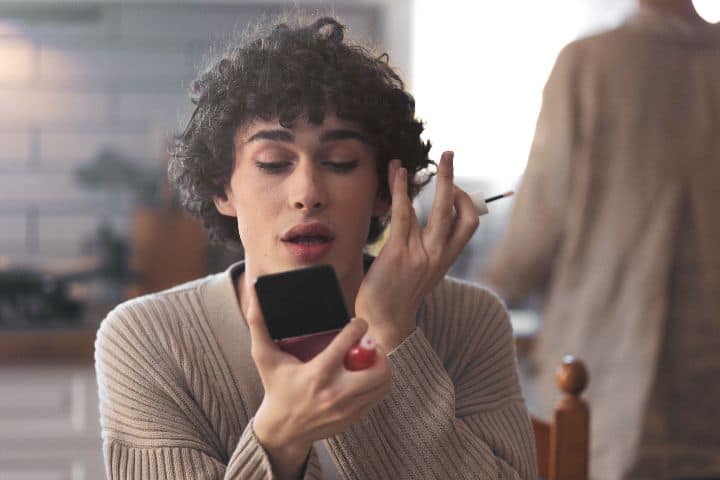
Feminising the Face with Contour, Blush & Glow
Contouring – Soft Structure, Not Sharp Lines
Contour in transgender makeup is about gentle shaping. Soft contour around the jawline, cheeks, and temples can subtly balance the face without obvious lines.
Cream contour products are easier to blend and adjust, making them a good option for beginners.
Blush – Bringing Life Back Into the Skin
Blush adds warmth and balance after base makeup. Placing it slightly higher on the cheeks can give a lifted look. Cream blush is often easier to control and blends smoothly into foundation.
Highlighter – Subtle Light Placement
Highlighter works best when kept minimal. Apply it to the tops of the cheekbones or the cupid’s bow and avoid textured areas.
Setting Powder vs Setting Spray
Powder controls shine and movement, while setting spray helps layers sit together and last longer. Using both lightly can help makeup feel more secure on long days.
Eye Makeup Essentials for Trans Women
Eyeshadow – Soft Definition That Opens the Eye
Neutral eyeshadows are versatile and easy to wear. Keeping darker shades toward the outer corner and blending upward helps open the eye, particularly for hooded or deep-set shapes.
Eyeliner – Definition Without Harshness
Pencil liners are easier to control and create softer lines. Tightlining adds definition without closing the eye, while small wings are often more forgiving than dramatic flicks.
Mascara – The Fastest Feminising Step
Mascara frames the eyes instantly. Lengthening formulas open the eye, especially when lashes are gently curled first. Keeping lower lashes light helps maintain balance.
Lip Makeup That Completes the Look
Lipstick – Shape, Colour & Confidence
Lipstick brings focus to the face. Soft pinks, mauves, and nudes work well for everyday wear. Subtle overlining can add fullness without looking drawn on, and cream finishes are easier to work with than matte.
Lip Gloss – Softness & Dimension
Gloss adds light and dimension, especially when applied to the centre of the lips. Pairing gloss with lipstick or liner helps prevent feathering.
Top Essential Makeup Items for Transgender Women
A smaller kit is easier to manage and learn with. Most trans makeup routines benefit from:
- Peach or orange corrector
- Buildable foundation
- Cream contour
- Blush
- Neutral eyeshadow palette
- Mascara
- Lipstick and gloss
- Setting powder
Each item earns its place by supporting control and flexibility.
Makeup Confidence Beyond Products
Practice, Lighting & Patience
Practising in natural light helps you see how makeup really looks. Trial runs before important days reduce stress, and gently removing makeup protects skin over time.
Makeup for Self-Expression, Not Rules
There’s no single way to do male-to-female makeup. Some days call for subtle looks, others for creativity. Exploring drag queen makeup can offer inspiration without expectation.
Treasure House of Makeup: Supporting Your Journey
Treasure House of Makeup offers professional-grade products designed for control, durability, and inclusive shade ranges. From cream correctors to HD foundations, their range supports transgender makeup at every stage, helping you build confidence with products that work reliably in real life.
Male-to-female makeup doesn’t require perfection or a large kit. With the right techniques, thoughtful products, and time to practise, makeup can become a supportive part of self-expression rather than a source of pressure.
FAQs
Do I need different makeup as I progress through transition?
Your makeup needs may change over time, but they don’t have to. Changes in skin texture, hair growth, or confidence levels can affect how you apply makeup, rather than what you use. Many people adjust techniques before replacing products, especially when it comes to base makeup and contour placement.
What makeup mistakes are most common when starting trans makeup?
Some common early mistakes include using too much corrector, applying foundation too thickly, and skipping skin prep. Rushing, blending or setting the face too heavily can also affect how makeup wears throughout the day.
How do I stop makeup from separating around my mouth and chin?
Separation around the mouth and chin is often caused by dryness, shaving irritation, or too much product. Using moisturiser, letting the primer fully settle, and applying thinner layers can help the makeup stay smoother in this area.
Should I shave or use hair removal before applying MTF makeup?
Shaving is the most common option before applying male-to-female makeup, but timing matters. Shaving earlier in the day can reduce redness and irritation. Hair removal methods such as waxing or laser can affect skin sensitivity, so makeup application may need to be adjusted while the skin recovers.
Sources
https://rcsgd.sa.ucsb.edu/resources/lgbtqia-informational-resources/makeup-101


Hey there! I’m Isabelle Kerrington, and I’m thrilled to share my passion for the performing arts through my blog. Focusing on theatre makeup, my posts will cover everything from product recommendations to helpful tips and engaging tutorials. Join me on this exciting journey as we explore the magical world of theatre makeup together.