Iconic 80s Makeup Trends: Real 1980s Makeup Looks & Big Hair
5th April, 2026
Big hair. Bigger blush. No apologies.
Real 80s makeup wasn’t subtle; Authentic 1980s makeup looks were bold, visible and built to be seen under bright lights and flash photography. True 1980s makeup meant strong blush placement, electric eyeshadow, defined lips and structured 80s makeup hair with serious volume. In this guide, I’ll break down real 80s makeup hallmarks, the 80s makeup trends that shaped the decade, three step-by-step 1980s makeup looks, and practical ways to make 80s makeup from the era wearable and stage-proof without looking like fancy dress.
KEY TAKEAWAYS
- Real 80s makeup = bold placement, visible colour, matte skin and strong blush
- Blush sat high and wide into the temples (draping)
- Eyes were blown out and extended, not softly diffused.
- 80s makeup hair was big, textured and structured
- To modernise Eighties makeup, balance one bold focus with fresher skin
What Defined Real 1980s Makeup?
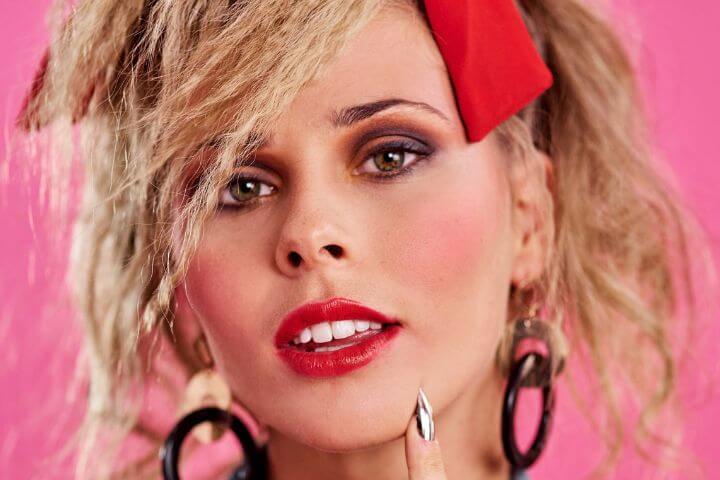
Real 80s makeup was shaped by lighting, performance and pigment limitations. Makeup from 80s editorials and music stages had to be read from a distance. Studio lights were harsh. Flash photography flattened the face. Products weren’t as finely milled as they are now. So placement became stronger, colour became louder, and matte finishes dominated.
Period editorials and campaign imagery from the decade show how deliberately structured 1980s makeup was; shapes were defined rather than blended away. That graphic quality is what separates real 80s makeup from today’s softened interpretations.
Blush wasn’t shy; it framed the face. Eyeshadow stretched toward the brow bone. Lips were sharply lined. Brows were full and brushed up. Everything was intentional.
Why It Looked So Bold
- Studio lighting intensity: Strong lights washed out features, so pigment had to be visible.
- Flash photography: Cameras flattened the dimension, so contour and blush were exaggerated.
- Stage culture: Pop stars, theatre performers and club scenes influenced mainstream 80s makeup trends.
- Early pigment formulas: Shadows needed packing and layering to show up clearly.
Real vs Modern Adaptation
| Feature | Real 1980s Version | Modern Adaptation |
| Blush | High, strong, visible | Slightly sheered, still lifted |
| Brows | Full, brushed, natural strength | Structured but groomed |
| Eyeshadow | Bright and extended | Same colour, tighter shape |
| Skin | Matte finish | Soft matte or satin |
If you’re recreating 1980s makeup looks for the stage, a matte base still works best. You can explore professional setting powders for a long-lasting finish and high-pigment eyeshadow palettes when you need true colour payoff under lights.
Textures & Finishes That Defined the 80s
1980s makeup wasn’t just about colour; texture mattered.
- Matte base dominance: Powdered complexions were common. Shine wasn’t the goal.
- Powder blush over creams: Powder layers better over matte foundations.
- Frosted eyeshadows: Silver, lilac and icy pink finishes were everywhere.
- Gloss resurgence: By the mid-decade, vinyl red gloss became popular.
Understanding texture stops this from becoming a costume copy. It helps you recreate real 80s makeup with accuracy.
The Faces That Defined 80s Makeup
Icons made 80s makeup trends visible worldwide.
Madonna wore bold blush draping and statement red lips.
Cyndi Lauper layered colour fearlessly across eyes and cheeks.
Grace Jones embraced sculpted intensity and sharp contour.
Brooke Shields defined the bold brow movement.
Runways and music videos fed directly into mainstream 1980s makeup looks. This wasn’t accidental; it was expressive, powerful, and designed to be seen.
80s Makeup Trends That Defined the Decade
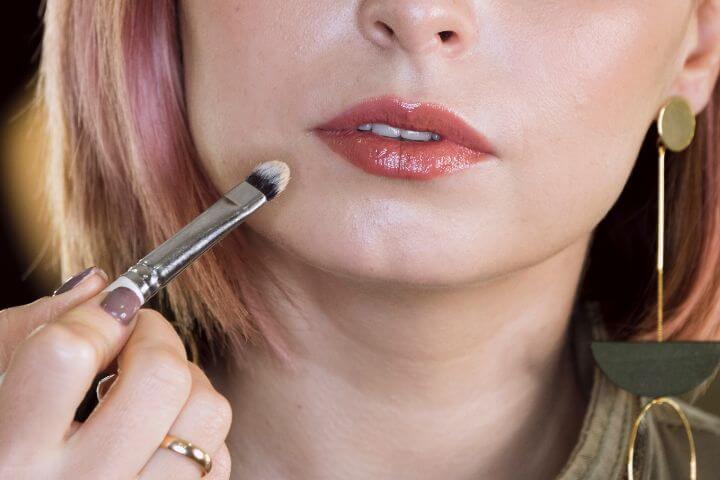
Blush Draping & High Placement
What it is: Blush sweeping from apples up toward temples and sometimes into the brow tail.
Blush draping has since been revisited on modern runways, with fashion publications like Vogue highlighting its sculpting effect, but in the 1980s, it wasn’t subtle contour. It was a visible lift. Real 80s makeup treated blush as framing, not background.
Why it worked: It restored the dimension lost under lighting.
How to apply:
- Start at the apple.
- Sweep upward, not inward.
- Keep placement high.
Modern tweak: Sheer slightly but keep the lift.
Stage-proof tip: Layer cream lightly under powder for grip. Explore high-impact blush palettes for stronger pigment.
Electric Blue & Purple Eyeshadow
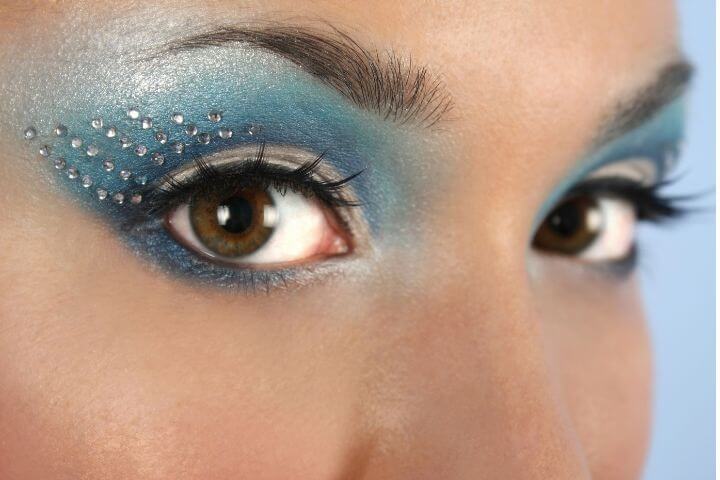
Cobalt, teal, lilac and fuchsia were key in 80s makeup looks.
How to apply:
- Prime the lid.
- Pack pigment ,don’t blend it away.
- Extend upward toward the brow bone.
- Add colour along the lower lash line.
Makeup artist Lisa Eldridge has spoken about how 80s eyeshadow was packed for visibility rather than diffused for softness, and the shape was meant to be seen from a distance. Similarly, Wendy Rowe has referenced the graphic placement of blue shadow across the lid and lower lash line as a defining trait of real 80s makeup. The guardrail? Avoid over-blending. 1980s makeup looks kept colour bold and structure clear.
High-pigment eyeshadow palettes make bold 1980s colours easier to build under stage lighting.
Bold Fuchsia & Red Lips
Matte pillar-box reds and hot pinks dominated.
How to apply:
- Line clearly ,structure matters.
- Fill fully with pigment.
- Choose matte or gloss intentionally.
Balance with clean matte skin to avoid overload. Long-wear lip liners help prevent transfer during performances.
Big Brows & Metallic Finishes (Quick Hits)
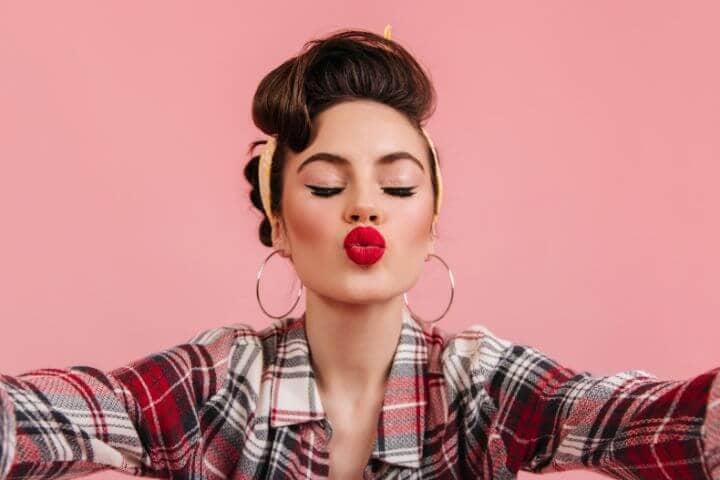
- Fuller brows brushed upward.
- Gold and silver metallic lids
- Frosted finishes
- Structured but natural strength
Keep metallics deliberate, full-foil lid for stage, softer accent for daytime.
3 Iconic 1980s Makeup Looks (Step-by-Step)
Look 1: Power Blush Editorial
- Prep with matte foundation.
- Map blush high toward temples.
- Define the upper lash line softly.
- Keep lips neutral.
- Lock with long-lasting setting sprays.
Look 2: Electric Blue Eyes + Nude Lip
- Apply eye primer.
- Pack cobalt shadow firmly.
- Blend edges only.
- Add lower lash line colour.
- Finish with satin nude lip.
High-pigment eyeshadow palettes make this easier under stage lighting.
Look 3: Glossy Red Lip + Minimal Eye
- Structure lips with liner.
- Fill with bold red.
- Layer gloss if desired.
- Keep skin matte and clean.
Long-wear lip liners prevent feathering during quick changes.
Common 80s Makeup Mistakes to Avoid
- Over-blending colour
- Too many bold features at once
- Placing blush too low
- Shimmer overload
- Ignoring the matte skin balance
80s Makeup Hair – The Missing Piece
80s makeup and hair weren’t afterthoughts; they completed the silhouette. Real 80s makeup loses impact if the hair is flat. Volume, texture and structure were part of the identity of Eighties makeup culture.
For stage and performance, hair must also hold up under heat, movement and quick changes. That means building the structure first, then layering hold.
Crimped Volume
Crimping wasn’t just about zig-zag texture. It was about expansion.
How to do it properly:
- Apply heat protection to dry hair.
- Crimp only the under-layers first (especially crown and mid-lengths).
- Leave the top layers smoother for control.
- Lightly brush through to expand, not flatten.
- Finish with layered spray ,mist, set, mist again.
Tool tip:
Use a medium-width crimper. Very tight crimps can look costume-like unless thoroughly brushed out.
For fine hair:
Light backcombing at the crown before crimping adds grip.
For thick hair:
Section cleanly and crimp in panels to avoid bulk at the roots.
When I prep performers for 80s-themed productions, I always crimp beneath the top layer rather than everywhere. It gives lift without looking messy under lights.
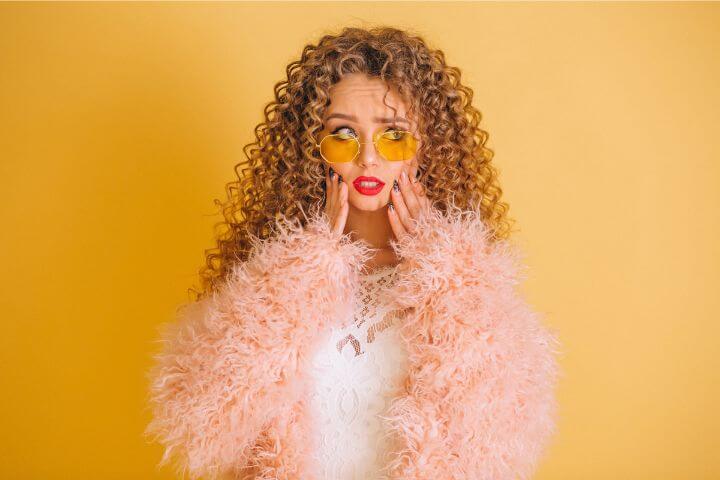
Big Curls & Perm-Inspired Volume
Perm-style curls were everywhere in the 1980s ,but you can recreate the look without damaging your hair.
Roller guidance:
- Medium rollers (around 25–32mm) for defined bounce
- Smaller rollers for tighter, Madonna-style volume
- Larger rollers for brushed-out glam shape
Application method:
- Set hair with volumising mousse before drying.
- Roll sections vertically for height.
- Allow to cool completely before removing.
- Separate with fingers first ,brush only if you want expansion.
- Backcomb lightly at the crown and mist with structured hold spray.
Backcombing safely:
- Tease in short strokes toward the root
- Never drag a comb through knots
- Smooth the surface layer only
Under stage lighting, curls drop faster than you expect. I recommend setting slightly tighter than your final desired shape, so it settles to the right volume.

Side Ponytails & 80s Accessories
The side ponytail is one of the most recognisable 80s makeup hair pairings.
Placement matters:
- Position it high, above the ear line
- Keep tension secure at the base
- Wrap with a scrunchie or fabric tie for authenticity
Banana clips were also widely worn for dramatic, pulled-back volume. They create height at the crown while keeping the face open ,perfect for bold blush or electric eyeshadow.
Performance tip:
Secure with hidden grips inside the ponytail base. Stage movement will quickly loosen a single elastic.
80s Hair Hold Guide (Stage-Friendly)
| Goal | Technique | Why It Works |
| Long-lasting lift | Layer mousse + rollers + spray | Builds structure, not just surface hold |
| Sweat resistance | Avoid heavy oils before styling | Oil breaks down grip under heat |
| Quick changes | Pre-set crown with hidden volume | Saves time between scenes |
| Damage control | Use moderate heat + cool fully before brushing | Prevents breakage |
Real 80s makeup needs hair that matches its strength. Volume should feel intentional, not chaotic.
How to Make 80s Makeup Wearable and Stage-Proof
Real 80s makeup was built for flash, stage and bold expression. Modern lighting and HD cameras behave differently. The key is knowing when to adjust and when not to.
Wearable Rules (Not Costume)
If you’re adapting 1980s makeup looks for everyday wear:
- Choose one bold focus: blush, eyes or lips
- Keep skin softly matte rather than fully powdered
- Tighten eyeshadow shape slightly
- Keep metallics controlled
- Let brows look full but brushed, not overdrawn
| Real 80s | Wearable Version |
| Full draped blush to temple | Lifted blush, slightly diffused |
| Shadow to brow bone | Colour concentrated on lid |
| Heavy liner + bold lip | Defined lip, softer eye |
| Full vinyl gloss | Controlled shine or satin |
The goal isn’t to tone it down completely; it’s to balance it for modern environments.
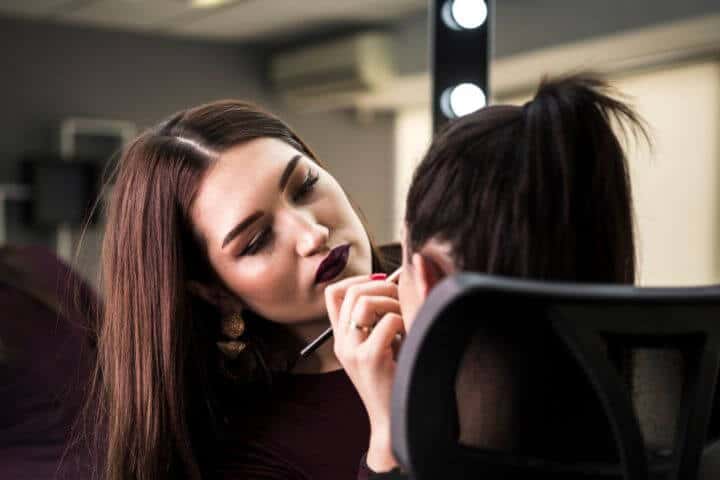
Elite Stage-Proof Checklist (Theatre-Ready 80s Makeup)
This is where 80s makeup becomes performance-grade.
Under stage lights, pigment fades, sweat breaks down base and gloss transfers. Building layers correctly makes all the difference.
1. Start With Grip
- Apply a performance-ready primer across the T-zone and cheeks
- Let it settle fully before the foundation
- Press, don’t rub
Grip prevents separation under heat.
2. Layer Cream + Powder Strategically
For blush draping or bold eyes:
- Apply a light cream base first
- Set lightly
- Layer powder pigment over the top
This sandwiching technique locks colour in place. It’s especially effective for real 80s makeup, where placement is high and visible.
3. Lock the Base
- Use professional setting powders through the centre of the face
- Press powder into skin using a puff rather than sweeping
Sweeping disturbs product. Pressing sets it.
4. Reinforce Edges
Sharp liner and lip edges define 1980s makeup looks.
- Outline lips clearly with long-wear lip liners
- Reinforce the outer third of the lash line
- Avoid gloss on outer lip corners if movement is heavy
Transfer often happens at edges first.
5. Final Seal
Finish with long-lasting setting sprays in light layers:
- Mist once
- Allow to dry
- Mist again
Layering creates hold without stiffness.
6. The 2-Minute Touch-Up Kit
For quick backstage fixes:
- Blotting paper
- Small pressed powder
- Lip liner
- Cotton buds
- Mini spray
Under theatre heat, shine returns first at the centre of the face. Blot before reapplying powder to avoid build-up.
Stage vs Real 80s: What Stays the Same?
- Bold placement
- Visible pigment
- Structured lips
What changes is the durability technique, not the aesthetic.
When working under stage lighting, I always check blush placement from a distance of at least 3–4 metres. If you can’t see the lift from there, it won’t be seen from the audience.
That visibility test is what separates real 80s makeup from a softened interpretation.
Real 80s makeup was bold, visible and built for impact. From high blush draping to electric blue lids and structured 80s makeup hair, the decade embraced colour and shape without hesitation. By understanding true 1980s makeup techniques and adjusting placement, balance, and durability, you can recreate iconic 1980s makeup looks that feel powerful, wearable, and stage-ready today.
Related Makeup Tutorials

Hey there! I’m Isabelle Kerrington, and I’m thrilled to share my passion for the performing arts through my blog. Focusing on theatre makeup, my posts will cover everything from product recommendations to helpful tips and engaging tutorials. Join me on this exciting journey as we explore the magical world of theatre makeup together.