Why Is My Makeup Separating Under Stage Lights? Causes & Fixes
6th October, 2026
You are probably asking yourself why is my makeup separating under stage lights? The simple answer is that makeup tends to separate when sweat, oil, skin preparation and product layering prevent the base from staying evenly on your skin. The problem is that stage lights can make this even more noticeable. Those bright lights will highlight that shine, patchiness and uneven texture.
The good news is that such separation can usually be prevented with the right preparation, products and application techniques. This guide will tell you more on how to keep your base looking fresh under stage lights like a pro.
Key Takeaways
- Makeup separation usually comes from a combination of sweat, oil, skin prep and product layering.
- Stage conditions, including heat and strong lighting, make separation far more noticeable than it would be day to day.
- How skin is prepped and how products are layered underneath the foundation plays a big role in how well the base holds.
- Piling on more foundation almost always makes patchiness and separation worse, not better.
- Strategic setting and small, targeted touch-ups do far more good than a full reapplication.
Why Is My Makeup Separating Under Stage Lights?
Makeup separation happens when foundation stops sitting as one even layer on the skin.
It will start to break apart into patches. It will also gather in fine lines, or turn oily and shiny in certain areas while staying matte elsewhere. It’s actually not the same as fading. Fading refers to when colour and coverage simply wear thin over time.
Separation is more visible and will usually happen faster! After all, it is more or less about the product physically breaking down, not just wearing away over time.
It is worth noting that makeup separating might look different from person to person and from show to show. Some people notice foundation gathering around the nose and chin.
Others see it turn shiny across the forehead while staying patchy on the cheeks. The pattern usually points back to a specific cause, which makes it easier to fix once it’s been identified.
So, if you are wondering why does my foundation separate hours after it looked completely settled? In most cases, the answer sits further back in the routine, in preparation and layering rather than the foundation itself.
Why Do Stage Lights Make Makeup Separation More Noticeable?
Stage lighting is bright, warm and unforgiving. It thus exposes texture, shine and unevenness that would barely register under normal room lighting.
Now add in the heat these lights generate. Then there are physical demands of a performance.
| Stage or Performance Condition | What You May Notice |
|---|---|
| Heat and perspiration | Makeup becomes more mobile and starts to shift |
| Strong lighting | Shine and uneven texture become far more visible |
| Long wear | The base has more time and opportunity to break down |
| Facial movement | Makeup can shift around the mouth, eyes and other moving areas |
The result is that makeup separation becomes far more likely to show.
This perhaps answers a common question many have, that is, why is my makeup patchy by the second act when it looked fine backstage?
Quite often it is movement on stage coupled with heat and strong lighting. Together they expose texture that might have been hidden under softer, gentler light.
Keep in mind that no two venues behave the same way either. A small, warm studio theatre will bring out sweat and shine far faster than a large, well-ventilated auditorium.
What Causes Makeup to Separate During a Performance?

A few specific issues tend to be behind most cases of separation.
Here’s what to look out for:
- Excess oil or sweat
Perspiration and natural oil production both make the skin’s surface more mobile. Once that happens, the foundation has nothing stable to hold onto. So, it starts to slide, pool or break apart, particularly around the T-zone. It’s worth reading our full guide on how to stop makeup sweating off to help you get to the bottom of the issue.
- Dry or dehydrated skin
Dry patches behave in the opposite way. Foundation can’t sit evenly on rough or flaking skin, so it clings unevenly instead. This creates a patchy look almost immediately.
- Too many products layered underneath makeup
Heavy skincare, or layers that haven’t had time to properly settle will also change how foundation sits on top.
The order and amount of skincare and primer used before makeup also affect the base for hours afterwards.
Our guide on how to layer primer and moisturiser goes into more detail on getting that order right.
- Too much foundation
Adding more product to fix an already patchy area rarely helps.
It tends to make texture and separation more obvious, especially once the extra layer starts to move under stage lights.
- Products that don’t work well together
Not every primer, moisturiser and foundation pairs well together.
Usually it comes down to mismatched textures and finishes more so when a new product has been introduced without testing it first.
How Should You Prep Your Skin Before Stage Makeup?
Here are a few simple habits that can come in handy to prep your skin:
- Start with clean, appropriately moisturised skin rather than skipping prep entirely.
- Avoid piling on heavy skincare right before makeup application.
- Give moisturiser and skincare a few minutes to properly settle before primer goes on.
- Use primer to create a smoother, more even surface for foundation to grip.
- Match preparation to how your skin is behaving that day, rather than following the same routine regardless.
More product isn’t automatically the fix. Sometimes the better move is using less, and giving each layer time to do its job.
A stable, well-prepped base is what gives the foundation something reliable to sit on, which is exactly what stage conditions demand. This is easy to overlook backstage when time is tight, but rushing prep tends to cost far more time later, once corrections are needed mid-show.
A product like the Mehron Velvet Finish Primer is a good example of the kind of professional primer built to create that smoother, more stable canvas before foundation goes on.
How Should You Apply Foundation to Prevent Separation?
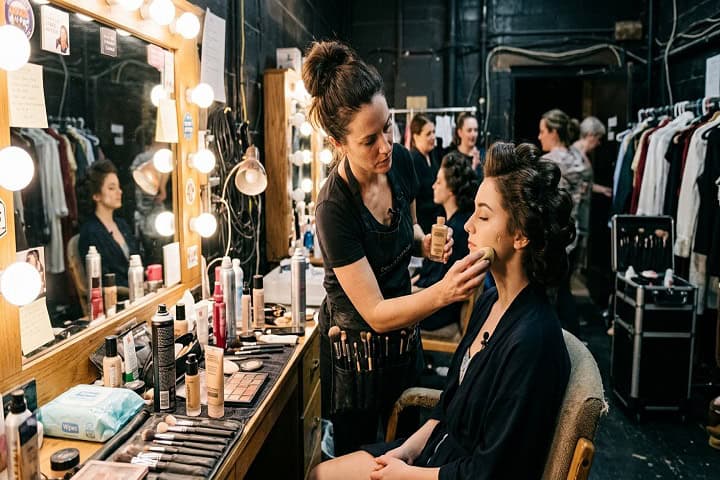
The way foundation goes on is just as important as what’s underneath it. A controlled, gradual approach holds up far better than one heavy application.
Here is a quick practical sequence you can follow:
- Apply a controlled amount rather than starting heavy.
- Blend evenly across the face before adding more.
- Build coverage gradually, only where it’s actually needed.
- Check high-oil and high-movement areas, including the nose, T-zone and around the mouth.
- Assess the base properly before deciding whether more product is needed.
How Do You Stop Makeup Separating During a Performance?
Once a performance is underway, the instinct is often to reach for more foundation. That’s usually the wrong move.
A thick reapplied layer on top of makeup that’s already breaking down tends to make things worse.
Here is a better approach backstage:
- Blot excess oil or moisture with a clean sponge or blotting paper, rather than adding product straight away.
- Avoid rubbing the affected area, since this can disturb the surrounding makeup too.
- Correct just the affected section rather than redoing the whole face.
- Use the smallest amount of additional product that will actually help.
- Re-set the corrected area once you’re happy with it.
For particularly demanding shows, something like Mehron Skin Prep Pro can help manage oil and sweat before the base even goes on, giving the whole look a more stable foundation to start from.
In especially hot or humid venues, a product such as Mehron Barrier Spray can also help protect makeup from moisture and environmental factors backstage.
How Do You Set Makeup So It Holds Up Under Stage Lights?
Setting is what locks the base in place once application is finished. You do this well and you are bound to reduce unwanted movement. It also helps control shine for the rest of the performance.
The key is being strategic rather than heavy-handed. Focus powder on areas prone to shine or movement, such as the T-zone, rather than dusting it evenly across the whole face.
Setting works alongside good preparation and controlled application, not instead of them. Powder genuinely can’t rescue a base that was over-applied or poorly prepped in the first place.
A short setting checklist that can help:
- Use a light hand and build up powder only where needed.
- Prioritise oil-prone and high-movement areas first.
- Avoid heavy, cakey layers that can look flat under bright lighting.
- Check the result under lighting similar to what will be used on stage.
Getting the technique right makes a genuine difference here. Our guide on how to use setting powder covers the practical side of application in more depth.
A professional option like Mehron Colorset Powder is built with theatrical use in mind. It is a solid choice for holding a base steady through a full performance.
Quick Pre-Show Checklist for Makeup That Won’t Separate
Before stepping on stage, run through this:
- Skin is clean and appropriately moisturised.
- Skincare and primer have had time to settle.
- Foundation has been applied in controlled, gradual layers.
- High-oil and high-movement areas have been checked and addressed.
- The finished look has been assessed under lighting similar to the stage.
- The base has been set where it actually needed it.
- Touch-up products are packed and ready before the show starts.
Wrapping up
In a nutshell, makeup separation rarely comes down to one root cause. The likes of sweat, oil, heat, skin preparation and product layering all play a part not to mention that stage lighting simply makes any of these issues harder to hide. This is why good preparation, controlled application and strategic setting will hold up far better through a long performance.
You can check out our professional stage makeup product options covering the main stages of a long-lasting makeup routine, from preparing the skin to setting and sealing the finished look:
| Product | Best for | How it helps |
|---|---|---|
| Mehron Skin Prep Pro | Preparing the skin | This clear, fragrance-free liquid creates a moisture barrier between the skin and makeup, helping makeup last longer under stressful conditions. It is applied before makeup and allowed to dry thoroughly. |
| Mehron Velvet Finish Primer | Smoothing the base | A smoothing primer can help create an even surface before foundation, particularly when you want a smoother, more controlled finish under stage or studio lighting. |
| Mehron Colorset Powder | Setting cream and liquid makeup | A professional setting powder helps lock your base in place and reduce the effects of surface moisture and oil during wear. |
| Ben Nye Neutral Set Powder | Setting and reducing shine | Ben Nye’s setting powders are designed to lock makeup in place while helping minimise shine and reduce smudging or fading. |
| Mehron Barrier Spray | Sweat and moisture protection | This versatile spray can be misted onto clean, dry skin before makeup to help keep sweat from coming through. A final mist can then help seal the finished makeup and reduce transfer onto costumes. |
| Ben Nye Final Seal Matte Sealer | Long-wear finishing | A finishing sealer designed to help protect the completed makeup from moisture, rubbing and wear. Suitable for demanding performance conditions. |
| Kryolan Fixing Spray | Finishing stage | A professional fixing spray can provide an additional protective layer over the finished makeup, helping it withstand the demands of stage and studio work. |
Frequently Asked Questions
Why is my foundation separating so soon after I’ve just applied it?
This is usually a sign that too much was applied too quickly. Working over an area that’s already starting to break down rarely fixes it.
It’s better to pause, assess, and build from a lighter base rather than repeatedly layering on top of a patch that’s already struggling.
Why is my makeup separating after a few hours?
A base that looks fine early on can start to separate later due to sweat, oil, heat, facial movement and simply the length of time it’s been worn. Long performances give all of these factors more time to build up, which is why separation tends to show up gradually rather than all at once.
How can I stop my makeup from separating throughout the day?
Prepare the skin properly, avoid excessive product underneath foundation, and apply in controlled layers rather than one heavy coat. Manage oil and sweat as the day goes on, set the base strategically, and touch up small areas rather than reapplying foundation across the whole face.
How do I stop foundation separating on oily skin?
Start with appropriate skin preparation and avoid layering on too much skincare or primer beforehand. Apply foundation in controlled amounts, pay close attention to oil-prone areas like the T-zone, and set strategically rather than relying on a heavy layer of powder to compensate later.
Why does my makeup separate around my mouth?
This area moves constantly during talking, singing and performing, which puts extra strain on the base. Product build-up, excessive foundation, or dryness in this spot can all make separation worse. Correcting it usually means gently addressing just that area rather than adding another full layer on top.
Why does my makeup separate on my forehead?
The forehead tends to produce more oil. It is also directly exposed to heat and stage lighting, which makes any shine or separation there especially noticeable. Product build-up can add to the problem. Controlled application and strategic setting in this area usually go a long way toward keeping it steady.

Hey there! I’m Isabelle Kerrington, and I’m thrilled to share my passion for the performing arts through my blog. Focusing on theatre makeup, my posts will cover everything from product recommendations to helpful tips and engaging tutorials. Join me on this exciting journey as we explore the magical world of theatre makeup together.